Why do Universities still use paper MCQ exams?

July 8, 2026

How Universities and exam bodies combine the reliability of paper-based assessments with fast, accurate OMR scanning and automated data capture.

Despite the rapid growth of digital assessment, paper multiple-choice question (MCQ) exams remain a trusted choice for many universities. Paper-based assessments continue to offer significant advantages in reliability, accessibility and security.


Reliability

One of the biggest reasons universities continue to use paper MCQ exams is reliability. Paper examinations are not affected by network failures, software issues, power outages or device compatibility problems. When thousands of students are sitting the same assessment simultaneously, paper provides a dependable and consistent experience.


Cost-Effective

Implementing digital and computer-based testing across an entire institution requires substantial investment in hardware, software, technical support and secure testing environments. For many universities and exam bodies, paper MCQ exams remain the most secure, practical, and cost-effective solution.


Faster Results with Modern Data Capture

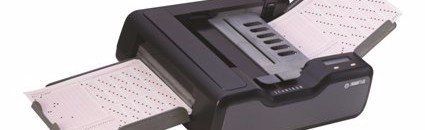
Paper exams no longer mean slow marking. Modern Optical Mark Recognition (OMR) and intelligent data capture technology allow completed answer sheets to be scanned and processed within minutes, providing rapid, highly accurate results while maintaining the familiarity of paper-based testing.

At MurrayData, our data capture solutions help universities automate the marking of MCQ exams, reducing administrative workload while improving accuracy and turnaround times.


Supporting Academic Integrity

Paper examinations continue to play an important role in maintaining assessment security. They eliminate many of the cyber security concerns associated with online examinations and can be delivered in controlled exam halls using established invigilation processes.


When combined with secure printing, barcode tracking and automated data capture, paper-based assessments provide a robust and auditable examination process.


Accessible for Every Student

Paper exams can be easier to access for students requiring certain adjustments and remove concerns around digital confidence or unfamiliar software. Universities can also provide alternative formats where required without relying on specialist technology.


A Balanced Solution

Today's paper MCQ exams are supported by sophisticated scanning and data capture technology that combines the simplicity of paper with the speed of digital processing.  Universities, schools and exam bodies (and their cohorts!) benefit from simple, familiar assessment delivery, while also benefitting from automated marking, rapid reporting and reliable data.


For institutions looking to improve efficiency without completely redesigning their assessment processes, paper-based MCQ exams supported by intelligent data capture remain a brilliant solution.


How MurrayData Can Help

MurrayData has extensive experience supporting UK universities with secure, accurate and efficient data capture solutions for examinations. From professionally designed OMR answer sheets to high-speed scanning and automated results processing, we help institutions reduce manual marking, improve accuracy and deliver results faster.


We also provide tailored reports, providing insight into question performance, pass rates, and much more.


If your university is looking to modernise its exam marking process while retaining the reliability of paper MCQ exams, MurrayData can help.


Get in touch
By Ken Rafferty March 26, 2018
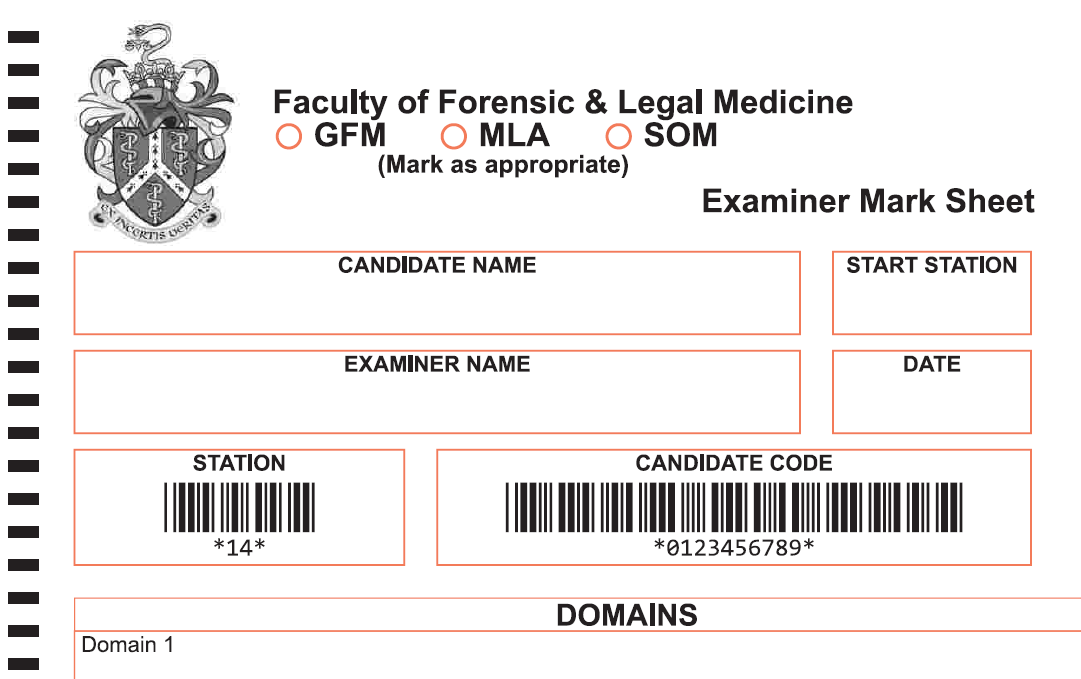
Having completed a Multiple Choice Question (MCQ) assessment for the Faculty of Forensic & Legal Medicine (FFLM) in Oct 2017, they were keen to retain our services for their OSCE's in Mar 2018. We worked with them to create a brand new OSCE answer sheet, part of which is shown above, and had it lithographically printed in Madrid. Our print partner in Madrid then personalised 14 sheets for every candidate taking the OSCE : 1 sheet for every station they would be assessed on. Once the OSCE's were completed, we scanned the sheets, captured the raw data, then exported it as an Excel file. At this point, our work was only just beginning, as we manipulated the Excel sheets for Angoff scores, weightings, pass marks, standard deviation, min, max, average and a multitude of charts. Within one week of receiving all the completed forms, we had given the results back to FFLM. Jay Barton-Costa, the Examinations Manager at FFLM, was so pleased with our efforts and service that he congratulated us in an email, saying we had done a 'brilliant job'. We look forward to helping FFLM with their assessments going forward. Do you think David Bowie once did OSCE exams, then wrote the song 'Station To Station' ....? :-)
By Ken Rafferty February 1, 2018
Having been incorporated on 7 Oct 2009, we are now entering our 10th full year of being in business. Our new financial year begins today (1st Feb 2018) and we have certainly seen a lot of technological, commercial and operational changes over the last 9 years. We have been involved in numerous projects during this time, here in the UK, but also Ireland, France, Switzerland, Ghana and Nigeria. However, we consider stability and dependability to be at the very heart of our business ethos. Hopefully we have demonstrated that in the many systems we have sold, and in the services we have provided to our customers in this time. When customers are fully reliant on your OMR scanners, software and forms to fulfil critical functions, then you must ensure it works each and every time. Maybe we will have a 10th anniversary party in October. Here's to the next 10 years after that ...!
By paul keat September 11, 2017
I have finally decided to take the plunge and add a blog to my site. I always wanted an easy way to share information with visitors and I'm super excited to start this journey. Keep coming back to my site and check for updates right here on the blog.
By paul keat September 11, 2017
Anyone can make one: For better or worse, anyone can write a blog post about anything they want. Everyone has a voice and the best voices will rise to the top. The writer can show their personality: In blog posts, the writer has more leeway to add in their voice and personality than other types of writing. Blogs are a great form of mass communication: You can help people, learn new things, entertain your audience-the possibilities are endless and amazing. Blogging opens up all of these to a very wide audience. You can make money: Get the right blog going and you can make a lot of money through advertising and sponsored posts. It allows people to craft better thoughts: Instead of reading haphazard, uneducated Facebook statuses, it's much better to see people's thought process in a well-written blog post. You can establish a community: Blogging allows you to connect with other individuals who share the same interests. Sharing ideas and opinions within your community helps establish yourself as a thought leader. Good for SEO: Keeping content on your site fresh and relevant, you can use your blog to boost the search engine ranking (SEO) of your site and your business. It brings people back to your site: If your blog is strong enough and updated regularly, people will come back looking for more and bring traffic back to your site as well. It's free: It costs you a grand total of zero dollars to post to the blog, so if you have something to say, there's nothing to stop you. You can establish yourself as a thought leader: A blog is a great place for your original thoughts, and it can be a wonderful way to show off your individuality. If people like your ideas, you can become a thought leader in your industry! What else do you love about blogs? Let me know!